Card #035 · The Question That Matters Card
    Question That Matters · #035

    Mom and Dad have never discussed what happens financially if one of them needs expensive care. The reason is  .

    The Real Question from the Book · Family Money Conversations — Fairness, Contributions & Hard Truths

    Would I want my spouse's financial security protected above all else?

    The Answer

    For couples, this question can be particularly important. Many spouses quietly worry about what might happen financially if one partner requires long-term care for an extended period of time. The cost of care can be substantial, and without planning, it can place pressure on retirement savings that were meant to support two people for many years. Talking openly about this can actually be a profound act of care. **The honest questions to ask yourself.** If you required expensive care, would you want your spouse to prioritize their own financial security, even if it meant you received a lower level of care than you could technically afford? Or would you want your spouse to use shared resources fully for your care, trusting that they would manage financially afterward? Have you and your spouse ever talked about this directly? Some couples decide together that protecting the financial stability of the healthy spouse is the highest priority. They want to ensure that one partner's medical needs do not leave the other feeling insecure or financially exposed. Others take a different view. They may feel strongly that both partners' needs, including care needs, should be addressed fully, even if doing so means drawing deeply from shared resources. There is no universal right answer. But when couples talk honestly about their priorities, they replace silent worry with shared understanding. And that shared understanding can guide decisions when circumstances become difficult. **What the law actually protects.** Federal Medicaid rules include spousal-impoverishment protections so that one spouse needing nursing-home-level care does not financially destroy the other. In 2026, the Community Spouse Resource Allowance (CSRA) generally protects between roughly $31,584 and $157,920 of countable assets for the at-home spouse, plus the home, one vehicle, and personal belongings. A Minimum Monthly Maintenance Needs Allowance also lets the at-home spouse keep a portion of the institutionalized spouse's income. Exact figures vary by state and update annually. *This is general information, not legal advice — consult a NAELA-member elder law attorney for your situation.* **Raising the question with your spouse.** This is a conversation to have with your spouse directly, and it may be one of the most important financial conversations you ever have. 'I want to talk about something that's been on my mind. If one of us ever needed really expensive care for a long time, how do we want to handle that? I don't want us both sitting here worrying privately about it. I'd rather we talk through it together and make sure we're on the same page.' **Telling your adult children.** If you are an aging parent, this is also a conversation worth having with your adult children, not to burden them, but to help them understand your priorities. 'Your father and I have been talking about what we'd want if one of us needed expensive care. I want you to know that protecting the other spouse financially is our priority. We're telling you this now so you understand our thinking if we ever have to make hard decisions.' This transparency prevents your children from worrying that you have not thought about it, or from making assumptions that may not be accurate. **Bring in a third party if it helps.** Some people find this conversation easier with a financial planner or elder law attorney present. A professional can outline what legal protections exist for spouses, what Medicaid allows, and what options might preserve more resources than either of you realized. Sometimes having a third party frame the conversation makes it feel less frightening. **How loved ones can raise the conversation.** If you are an adult child and you sense that your parents have not had this conversation, you can gently encourage it. 'I've been reading about how expensive long-term care can be, and I know it can be really hard on a spouse financially. Have you two talked about what you'd want to happen if one of you needed care and the other didn't? I think it's worth discussing, just so you're both clear on what the plan is.'

    What This Looks Like in Real Life

    They had been married forty-six years and had never once talked about it. Not because they did not love each other, but because each of them had quietly assumed the other did not want to discuss it. He worried that bringing it up would scare her. She worried that bringing it up would feel like she was already preparing to leave him. It was their daughter, of all people, who broke the silence. Over Sunday dinner she said, gently, 'Mom, Dad — have you two ever actually talked about what you'd want if one of you needed care for a long time?' The pause was long. Her father finally said, 'I've been thinking about it for ten years. I just didn't know how to start.' Her mother said, quietly, 'I have too.' What came next was not a single conversation but a series of them, including one with an elder law attorney who explained the spousal protections they had no idea existed. They walked out of that meeting with a shared plan: if either of them needed nursing-home care, the priority was to protect the other spouse's home, income, and dignity first — and to use Medicaid planning, not just private pay, to make that possible. Her mother said later that the relief was almost physical. 'I didn't realize how heavy it had been until I put it down.'

    What to Do Next

    1. Pick a calm time — not after a doctor's appointment, not after a scary news story — and tell your spouse you'd like to talk about long-term care priorities together.
    2. Each of you write down, separately, your honest answer to: 'If I needed expensive care, what would I want to happen to our money?' Then compare.
    3. Schedule one joint meeting with an elder law attorney to learn what federal and state spousal-impoverishment protections actually allow.
    4. Once you agree on a shared priority, tell your adult children — briefly — so they are not guessing later.
    5. Revisit the conversation every 2–3 years, or after any major change in health, income, or family structure.

    Sources & references

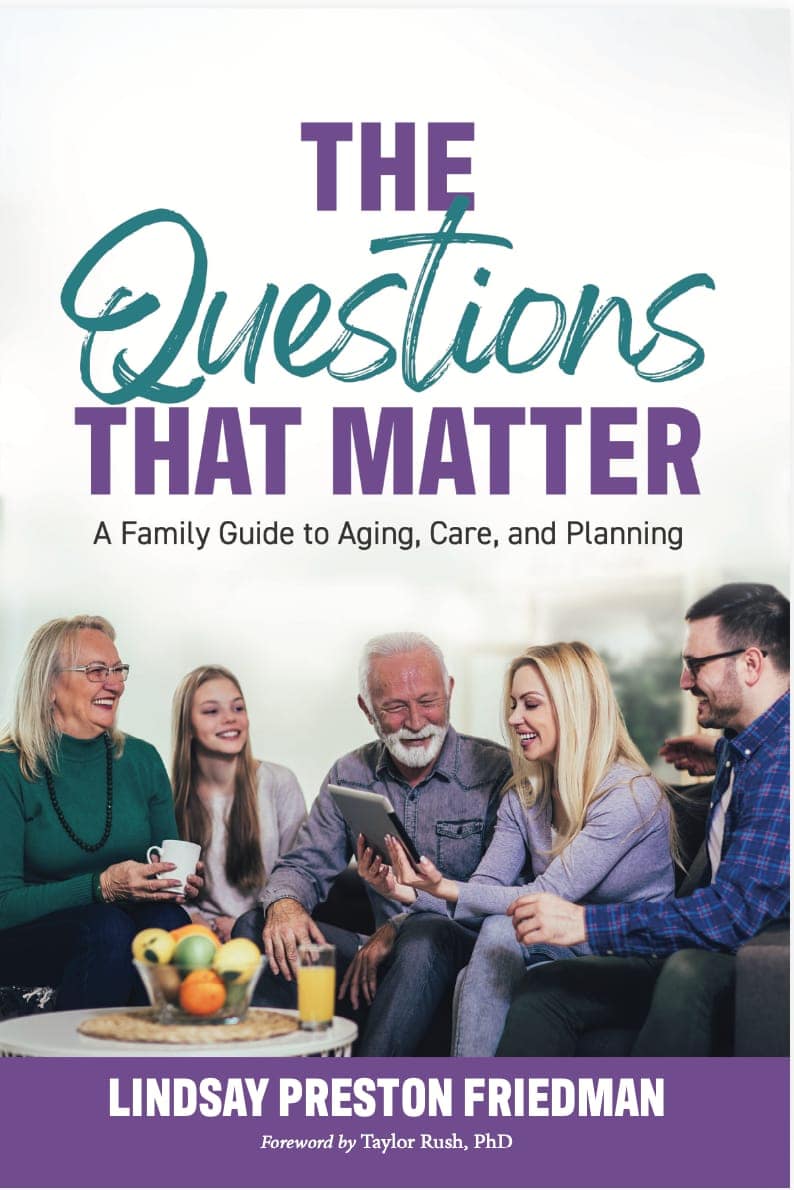
    The Questions That Matter — A Family Guide to Aging, Care, and Planning
    The Source of These Answers

    You've got the cards. The book goes deeper.

    Every card is a doorway. The Questions That Matter: A Family Guide to Aging, Care, and Planning is the full guide behind the deck — the chapter, the context, and the next conversation for every prompt you've already started at the table.

    Make It Personal

    Turn this question into your own plan.

    Reading the answer is one thing — knowing what it means for your family is another. Get a free, personalized Care Plan in minutes. No pressure, no sales calls, just the next right step for where you are today.

    Get Your Free Care Plan

    Free forever · No credit card · Founded by Lindsay Friedman