Card #031 · The Question That Matters Card
    Question That Matters · #031

    You try to explain the five-year Medicaid lookback period to your parent. They respond with  .

    The Real Question from the Book · Understanding the Costs — What Care Actually Costs and How to Pay for It

    Do I understand Medicaid eligibility before I might need it?

    The Answer

    Medicaid is the largest payer of long-term care in the United States. It is the safety net that catches people when private resources run out. But qualifying for Medicaid is not automatic, and the rules are complex. Many people have a vague sense that Medicaid is 'for poor people' and assume they will never qualify. Others assume they will qualify easily when the time comes. Both assumptions can be wrong. Understanding Medicaid eligibility before you need it gives you options. It allows you to plan. It helps you understand what assets are protected, what spending down actually means, and when it makes sense to consult an elder law attorney who specializes in Medicaid planning. **The honest questions to ask yourself.** Do you know what the income and asset limits are for Medicaid in your state? Medicaid is a state and federal program, and the rules vary by state. In most states, an individual can have no more than about $2,000 in countable assets to qualify. Some assets, like your primary home and one vehicle, are typically exempt — but there are limits, and the rules differ depending on where you live. Do you know what the spousal protections are? If you are married and one spouse needs long-term care while the other does not, Medicaid includes protections to prevent the healthy spouse from becoming impoverished. The 'community spouse' — the one not receiving care — is allowed to keep a certain amount of income and assets. But many people do not know these protections exist, and they make decisions out of fear that could have been avoided with better information. **The five-year look-back.** Medicaid reviews all financial transactions made in the five years before you apply. If you gave away money or assets during that time, it can result in a penalty period during which you are ineligible for benefits, even if you otherwise qualify. This rule is designed to prevent people from giving away assets to qualify for Medicaid. But it also means that planning must happen well in advance — not in the weeks before you apply. Have you ever talked to an elder law attorney about Medicaid planning? Most people have not. And most people wait until they are in crisis to do so. By then, many options are no longer available. Medicaid planning is not about gaming the system. It is about understanding the rules and making informed decisions that protect what can legally be protected while ensuring access to care when it is needed. **Why this matters.** If you wait until you are already spending thousands of dollars per month on care to think about Medicaid, you may find that you have spent down assets in ways that did not maximize available protections. You may have made decisions that, with better information, you would have made differently. If you plan earlier, while you are still healthy and resources are intact, an elder law attorney can help you structure assets in ways that comply with Medicaid rules while preserving more for a spouse or for your estate. This is not dishonest. It is not unethical. It is using the law as it is written to protect your family. But it requires foresight. **Raising the question with your loved ones.** Frame it as proactive planning, not crisis response: 'I've been reading about Medicaid and how it works for long-term care, and I think it might make sense for us to talk to an elder law attorney — not because I need care now, but because the rules are complicated and I want to make sure we're not making decisions that hurt us later.' **How loved ones can raise the conversation.** 'Have you ever looked into how Medicaid works for long-term care? I know it's complicated, but I think it's worth understanding, especially since there are things you can do now that might protect more of your assets if you ever needed it. Would you be open to talking with someone who specializes in this?' *This guidance is general and educational. Medicaid eligibility rules, asset limits, exemptions, and look-back enforcement vary by state and change over time. Always consult a qualified elder law attorney licensed in your state before acting on any planning decision.*

    What This Looks Like in Real Life

    She tried to explain the look-back to her father over coffee. 'Dad, Medicaid actually checks the last five years of your finances. So if you wanted to give the grandkids money, or transfer the cabin to my brother, doing it now versus doing it later actually matters a lot.' Her father waved her off. 'It's my money. I'll do what I want with it. They can't penalize me for being generous.' She did not push that day. But two years later, when his memory began slipping faster than they had expected, she sat at a kitchen table with an elder law attorney who walked them through what was still possible — and what was not. The cabin transfer he had made eighteen months earlier, the one he had insisted was 'just family business,' was going to count against him. Not forever. But long enough that the family would need to cover roughly $50,000 in care costs out of pocket before Medicaid coverage could begin. Her father listened quietly. Then he said, 'I wish I'd believed you.' She did not say I told you so. She said, 'Let's figure out what we can still do.' The attorney walked them through the spousal protections that would safeguard her mother. He restructured what could still be restructured. It was not the plan they would have built three years earlier. But it was a plan, and it gave them all something to stand on.

    What to Do Next

    1. Look up your state's Medicaid long-term care asset limit, income limit, and home/vehicle exemption rules — they vary significantly by state.
    2. If you are married, learn the community spouse protections in your state (Community Spouse Resource Allowance and Minimum Monthly Maintenance Needs Allowance).
    3. Treat the five-year look-back as a planning horizon: any gift, transfer, or asset move done now must be done at least five years before a Medicaid application to avoid penalty.
    4. Schedule a consultation with a NAELA-member elder law attorney while you are healthy and resources are intact — not after a crisis.
    5. Avoid 'do-it-yourself' Medicaid moves. Well-intentioned transfers (to children, to trusts, to grandchildren) can create penalty periods if structured incorrectly.
    6. Document and date every significant financial transaction. If a Medicaid application becomes necessary, you will need a clean five-year paper trail.

    Sources & references

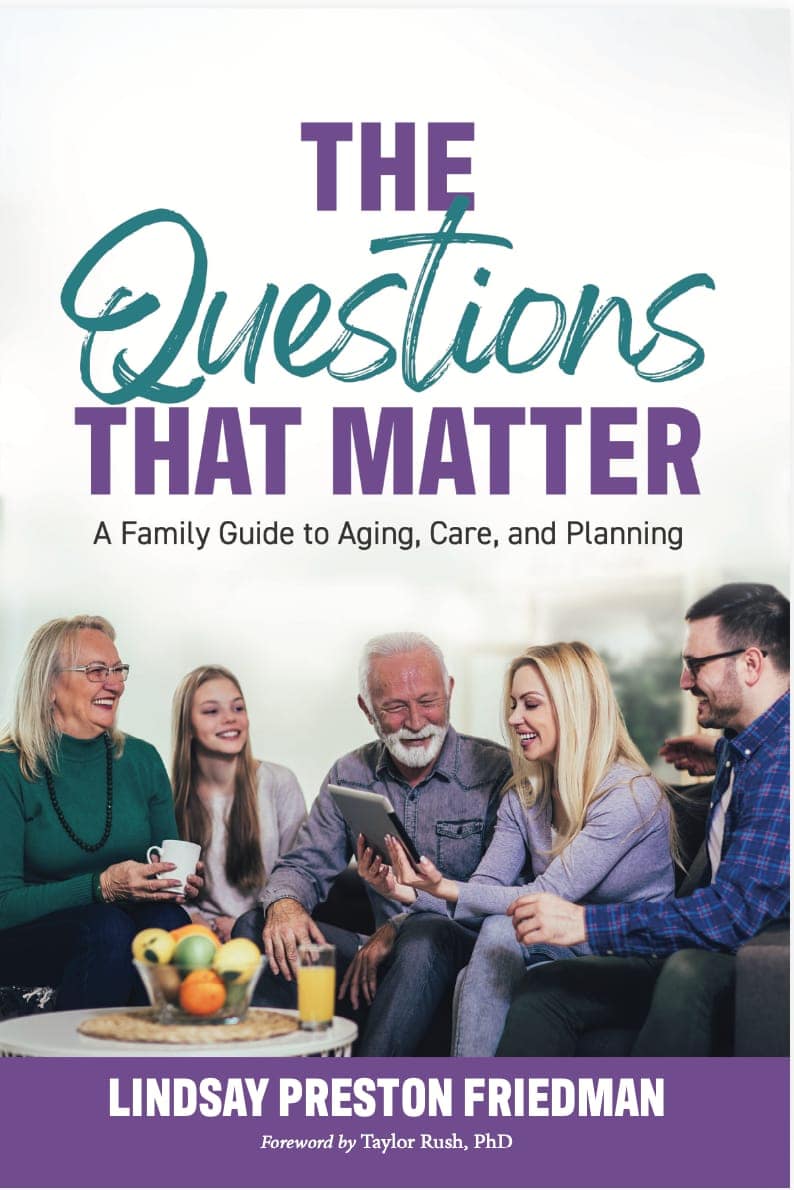
    The Questions That Matter — A Family Guide to Aging, Care, and Planning
    The Source of These Answers

    You've got the cards. The book goes deeper.

    Every card is a doorway. The Questions That Matter: A Family Guide to Aging, Care, and Planning is the full guide behind the deck — the chapter, the context, and the next conversation for every prompt you've already started at the table.

    Make It Personal

    Turn this question into your own plan.

    Reading the answer is one thing — knowing what it means for your family is another. Get a free, personalized Care Plan in minutes. No pressure, no sales calls, just the next right step for where you are today.

    Get Your Free Care Plan

    Free forever · No credit card · Founded by Lindsay Friedman