Card #019 · The Question That Matters Card
    Question That Matters · #019

    You live 900 miles away and your sibling lives 20 minutes from Mom. Their contribution so far has been  .

    The Real Question from the Book · Who Will Walk This With Me? — Building Your Circle of Support

    What if my support system lives far away?

    The Answer

    Distance is one of the most common and least-discussed challenges in family caregiving. Adult children scatter. Retirement moves a parent to a warmer climate, away from the family that used to be nearby. Suddenly, the people who love each other most are separated by hundreds or thousands of miles when the need arises. Distance does not disqualify someone from being a meaningful part of a support system. But it does require a different kind of planning — one that is honest about what proximity actually enables, and what it does not. **The honest questions to ask yourself.** If the people you are counting on live far away, think through what that means practically. Who would be there within hours in an emergency? Who would manage the day-to-day if something happened? Who is close enough to notice gradual changes over time — the kind of changes that are invisible in a holiday visit but visible to someone who sees you weekly? Think about what 'help from a distance' actually looks like. Long-distance support is real and valuable. It can include managing finances and paperwork, researching care options, coordinating with local providers, being the primary phone contact, handling insurance and legal tasks, and providing consistent emotional presence through regular calls. These are not small contributions. But they are different from physical presence, and no amount of phone calls substitutes for someone who can walk through the door. **Building local support when family is far.** If your family is largely remote, building a local support network becomes essential — not a backup plan, but a primary one. This is where neighbors, friends, faith communities, and community organizations become central rather than supplemental. These relationships, deliberately cultivated before they are urgently needed, can make an enormous difference. The most useful thing a distant family member can do is invest in understanding the local landscape. Learn who the neighbors are. Understand what community resources exist. Be the person who researches options, coordinates logistics, and fills the gaps that physical presence cannot — without pretending that those gaps are not real.

    What This Looks Like in Real Life

    Mom moved to Florida fifteen years ago for the weather. Her son is in Seattle. Her daughter is in Boston. For years, the arrangement worked beautifully — annual visits, weekly calls, a tight-knit condo community that watched out for her. Then the community thinned. Friends moved to be with their own children, or into care, or passed away. The neighbors Mom knew best are gone. Her son and daughter are still calling weekly, still flying down for holidays, still telling themselves she is fine because she sounds fine on the phone. What they cannot see from 2,500 miles away is the mail piling up, the same story told three times in one call, the bruise on her arm she does not remember getting. The geriatric care manager they finally hire — after a fall they only learn about a week later — tells them gently that the local infrastructure they had assumed would always be there has quietly disappeared. Distance did not cause the crisis. The unexamined assumption that someone local was still watching did.

    What to Do Next

    1. Map the local picture honestly: who would be at the door within hours in an emergency, and who would notice gradual decline week to week? If the answer is 'nobody,' that is the gap to close first.
    2. Define the long-distance role explicitly. Take ownership of one or two functions — finances, medical coordination, insurance, research — rather than promising vague availability.
    3. Invest in local infrastructure deliberately: introduce yourself to neighbors, identify a trusted friend or faith community contact, and consider hiring an Aging Life Care Manager (geriatric care manager) as your local eyes and ears.
    4. Schedule one local check-in per week from someone who is not family — a neighbor, friend, or paid companion. Weekly local eyes catch what monthly family visits miss.
    5. Have the honest conversation: 'I hate that I'm not closer. Let's figure out together what I can actually do from here, and what we need to put in place locally.'

    Sources & references

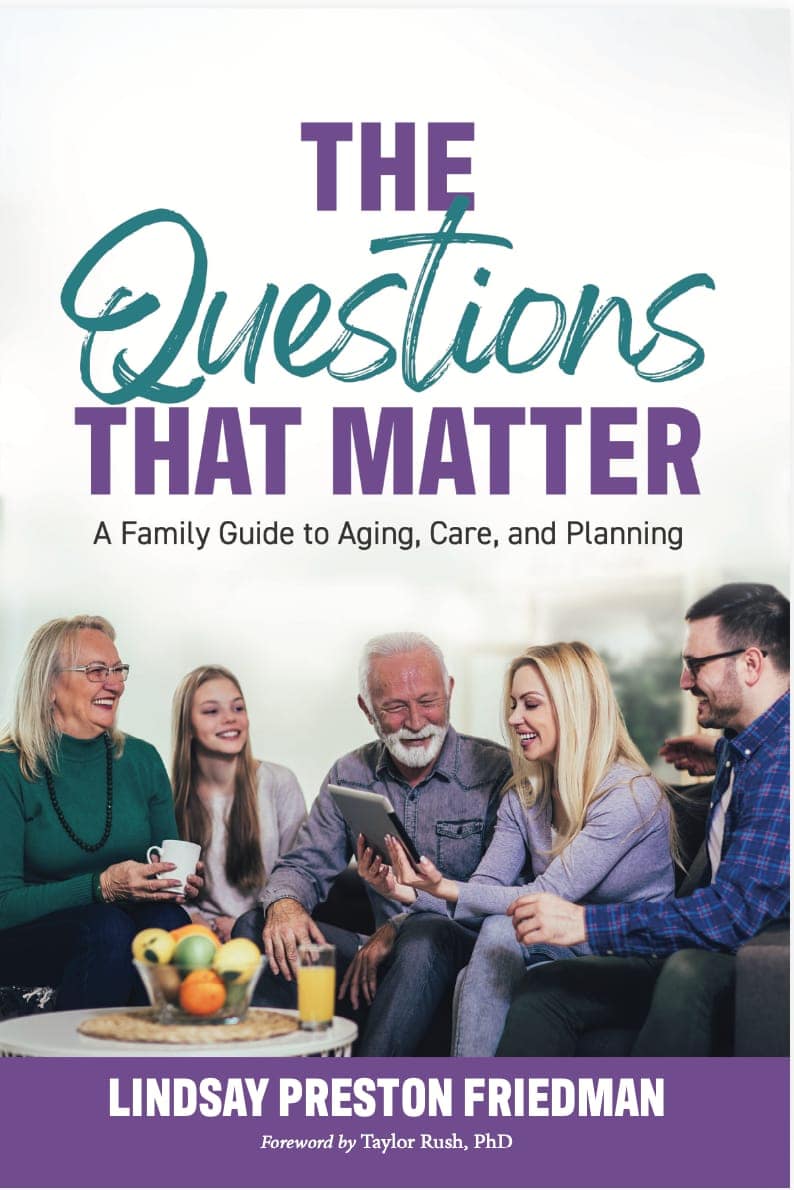
    The Questions That Matter — A Family Guide to Aging, Care, and Planning
    The Source of These Answers

    You've got the cards. The book goes deeper.

    Every card is a doorway. The Questions That Matter: A Family Guide to Aging, Care, and Planning is the full guide behind the deck — the chapter, the context, and the next conversation for every prompt you've already started at the table.

    Make It Personal

    Turn this question into your own plan.

    Reading the answer is one thing — knowing what it means for your family is another. Get a free, personalized Care Plan in minutes. No pressure, no sales calls, just the next right step for where you are today.

    Get Your Free Care Plan

    Free forever · No credit card · Founded by Lindsay Friedman