Card #018 · The Question That Matters Card
    Question That Matters · #018

    The family meeting to discuss Dad's care lasted three hours and accomplished  .

    The Real Question from the Book · Who Will Walk This With Me? — Building Your Circle of Support

    How do I handle sibling conflict and unequal contributions?

    The Answer

    Of all the dynamics that surface during a caregiving season, sibling conflict is among the most painful, and among the most predictable. Old roles reassert themselves. The responsible one becomes more responsible. The one who was never quite available becomes less available. The one who lives closest shoulders more than their share and begins to resent it. The one who lives farthest writes checks and calls to weigh in on decisions they did not help execute. Distance and proximity both carry their own tensions. Underneath all of it, the original family — the one you all grew up inside — comes roaring back to the surface, with its unresolved grievances and long memories and unspoken hierarchies intact. Caregiving reveals the architecture of a family in ways that nothing else quite does — who steps forward, who steps back, who communicates and who goes quiet. I have sat with siblings who had not spoken in years, brought back together by a parent's crisis, trying to make decisions under grief and exhaustion. What I know from both sides of this, as a professional and as a family member, is that the conflict is almost never really about the caregiving. It is about everything that came before it. **The honest questions to ask yourself.** If you have siblings, be honest about where each relationship actually stands. Which sibling is most likely to show up consistently? Which one is most likely to disappear under pressure? Which dynamics from your childhood are likely to resurface under stress? Ask yourself the harder question: What role do you play in the family system? Are you the one who takes over? The one who defers? The one who mediates? Most of us have patterns that run deeper than we realize. Recognizing your own pattern is the first step toward choosing something different. **Unequal contributions are inevitable — the question is whether they are chosen.** Caregiving contributions will almost never be perfectly equal among siblings. Geography, career, family obligations, emotional capacity, and the nature of each relationship with the parent all create natural variation. The goal is not equality. The goal is equity — a distribution that everyone has agreed to, that everyone understands, and that no one is silently resenting. **When a sibling is not contributing, and everyone knows it.** This is one of the most common and most corrosive dynamics in family caregiving. The sibling who is absent or minimally present often knows, on some level, that they are not carrying their weight. They may feel guilty about it. But guilt without conversation changes nothing. It simply festers. If you are the sibling carrying more than your share, you are allowed to name it. Not with accusation, but with honesty. 'I need more help than I'm getting, and I want to figure out together how we change that.' That sentence, said clearly and without venom, opens a door that resentment keeps permanently closed.

    What This Looks Like in Real Life

    Three siblings sit around their father's kitchen table for the family meeting they have been postponing for a year. The oldest, who lives twenty minutes away, has been managing every appointment, every prescription, every late-night phone call. The middle one lives across the country and sends thoughtful texts. The youngest has not visited in eight months and arrives with strong opinions about how things should be handled. Three hours later, they have rehashed every grievance from the last forty years. They have not made a single decision about their father's care. The oldest is in tears. The youngest is defensive. The middle one is trying to mediate from the air. What the meeting accomplished, in the end, was confirming what each of them already knew about the others. What it did not accomplish was a plan. The breakthrough came two weeks later, on a quiet phone call between the oldest and the youngest, when the oldest finally said, without anger, 'I am drowning. I am not asking you to move home. I am asking you to take one thing — just one — and own it completely.' That sentence did what three hours of family meeting could not.

    What to Do Next

    1. Before any conversation, name your own pattern in the family system. Are you the one who takes over, defers, or mediates? Choose deliberately what role you want to play this time.
    2. Lead with the relationship, not the ledger: 'I want us to talk about how we share this, not because I want to keep score, but because I want us all to still love each other on the other side of it.'
    3. If a group conversation is too charged, do it one-on-one. Individual calls with each sibling almost always move further than a family meeting in crisis mode.
    4. Ask each sibling for one specific, owned responsibility — not a vague promise to help. 'Take one thing and own it completely' is more useful than 'do more.'
    5. Avoid 'you never' and 'I always' framings. They create defensiveness, not partnership. You are not trying to win the argument. You are trying to change the situation.

    Sources & references

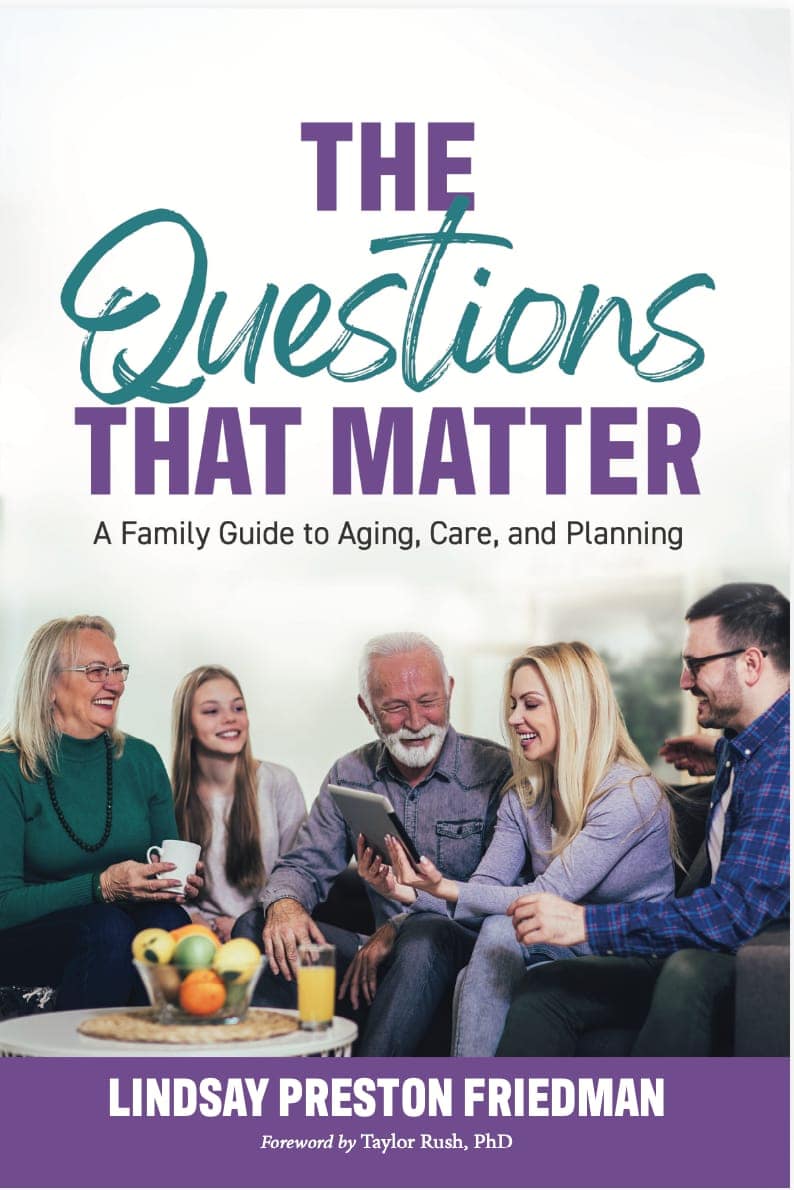
    The Questions That Matter — A Family Guide to Aging, Care, and Planning
    The Source of These Answers

    You've got the cards. The book goes deeper.

    Every card is a doorway. The Questions That Matter: A Family Guide to Aging, Care, and Planning is the full guide behind the deck — the chapter, the context, and the next conversation for every prompt you've already started at the table.

    Make It Personal

    Turn this question into your own plan.

    Reading the answer is one thing — knowing what it means for your family is another. Get a free, personalized Care Plan in minutes. No pressure, no sales calls, just the next right step for where you are today.

    Get Your Free Care Plan

    Free forever · No credit card · Founded by Lindsay Friedman