Card #020 · The Question That Matters Card
    Question That Matters · #020

    When you ask Mom who would notice if something was wrong, she thinks for a long time and says  .

    The Real Question from the Book · Who Will Walk This With Me? — Building Your Circle of Support

    What if I have a small support system or none at all?

    The Answer

    This question deserves its own space, and it deserves to be answered with complete honesty: some people do not have a family that is able or willing to help. Some people have outlived their support network. Some never had one that resembled the idealized version. Some are estranged from family. Some simply find themselves, through the particular shape of their life, more alone than they expected to be at this stage. If this is you, the most important thing to know is: you are not without options, and you are not without community. But those options and that community will not find you. You will need to build them, and build them intentionally. **The honest questions to ask yourself.** Who in your life, outside of family, knows you well enough to notice if something is wrong? Who would you call if you had a health scare at 10 p.m. and needed someone? Who attends the same community, congregation, or organization as you? These questions are not meant to amplify loneliness. They are meant to map it accurately — because you cannot address a gap you have not honestly identified. **The circle beyond family.** Neighbors are among the most underutilized resources in aging support, and among the most powerful ones. A neighbor who knows your routine, who notices when the mail is not collected, who will check on you without being asked — that person may be more valuable than a family member three states away. If you do not know your neighbors well, that is worth changing. Not as a transaction, but as a relationship. Invest in it before you need it. Friendships that are actively maintained provide both practical support and the kind of emotional presence that sustains quality of life. Research consistently shows that older adults with strong social connections have better health outcomes, recover from illness faster, and maintain cognitive function longer. Faith communities have supported people through aging and illness for as long as communities have existed. Congregations often have formal visitor programs, transportation ministries, meal delivery, and pastoral care. They also have something harder to name but equally valuable: the infrastructure of people who know each other and show up for each other. Community organizations — senior centers, volunteer networks, Area Agencies on Aging, civic groups — can connect you to both services and relationships. Many offer programs specifically designed to reduce isolation. They are often free or low-cost. They are frequently underused. Professional support — geriatric care managers, patient advocates, social workers — can serve as a kind of professional family for people who do not have a personal one. A geriatric care manager, in particular, can coordinate care, navigate systems, attend appointments, manage crises, and serve as a consistent advocate across every aspect of your care. If your support system is thin, this kind of professional relationship is worth considering seriously. **Building your network before you need it.** The single most important thing to understand is this: a network is far easier to build when you do not need it than when you do. A person in the middle of a health crisis is not in a position to cultivate new relationships or navigate new systems. The person who has done that work in advance is the one who has options when options matter most.

    What This Looks Like in Real Life

    She is seventy-eight, widowed, no children, one brother in another state who calls on birthdays. When her doctor asks at a routine appointment, 'Who would notice if something was wrong?' she opens her mouth to answer and then stops. She thinks for a long time. The honest answer is that she is not sure anyone would, not for several days at least. She leaves the appointment shaken — not by the question, but by the answer. Over the next six months she does small, deliberate things. She introduces herself to the woman two doors down and starts trading occasional groceries. She joins the Wednesday lunch at her synagogue. She accepts a friend's standing invitation to a weekly walk. She hires an Aging Life Care Manager for an initial consultation, just to know who to call. Nothing dramatic has changed. She still lives alone. But the next time someone asks who would notice, the answer is different. Three names. A standing routine. A professional in her contacts. The architecture of a life that someone is paying attention to.

    What to Do Next

    1. Map your network honestly: list every person, by name, who would notice within 24 hours if something was wrong. If the list is short, that is the gap to close.
    2. Introduce yourself to two neighbors this month. Not transactionally — just enough that they would recognize a change in your routine.
    3. Identify one community anchor — a faith community, senior center, walking group, or volunteer role — and commit to a recurring weekly presence. Routine creates the people who notice when routine breaks.
    4. Contact your Area Agency on Aging (call 211 or eldercare.acl.gov/home) to learn what local programs exist for visitors, transportation, meals, and friendly check-ins.
    5. If your support system is thin, consider an introductory consultation with an Aging Life Care Manager (aginglifecare.org) — a professional who can serve as a coordinator and advocate when family cannot.
    Sources & references

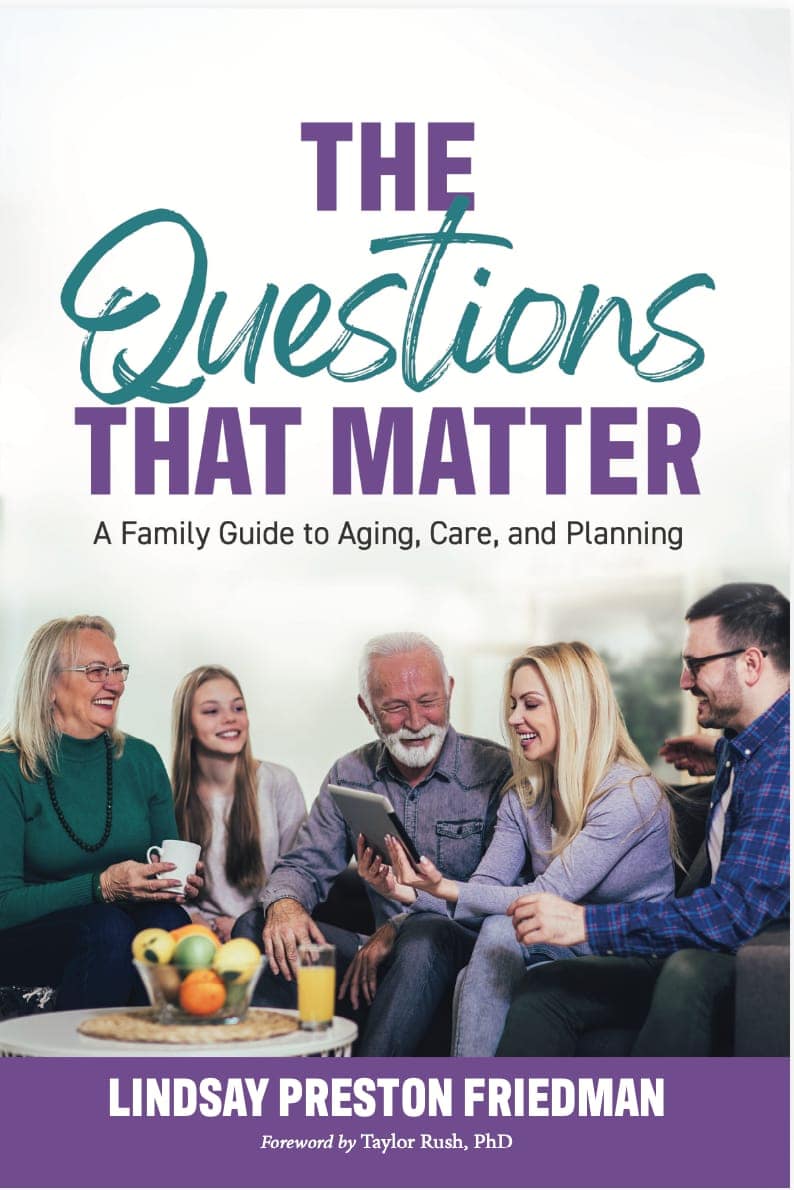
    The Questions That Matter — A Family Guide to Aging, Care, and Planning
    The Source of These Answers

    You've got the cards. The book goes deeper.

    Every card is a doorway. The Questions That Matter: A Family Guide to Aging, Care, and Planning is the full guide behind the deck — the chapter, the context, and the next conversation for every prompt you've already started at the table.

    Make It Personal

    Turn this question into your own plan.

    Reading the answer is one thing — knowing what it means for your family is another. Get a free, personalized Care Plan in minutes. No pressure, no sales calls, just the next right step for where you are today.

    Get Your Free Care Plan

    Free forever · No credit card · Founded by Lindsay Friedman