Many people say, 'I want to stay in my home as long as possible.' That is a valid and understandable desire. But it is not a plan. Aging in place does not just happen. It requires intention, resources, and often significant modification to both the home and the support systems around it.
**What it actually requires.** If you want to stay home, what would that take? Most homes need modifications — grab bars in the bathroom, a walk-in shower, ramps or a stair lift, improved lighting, sometimes a first-floor bedroom or laundry. These are not cosmetic. They are structural changes that make a home safer for an aging body. Some are simple and inexpensive. Others are not. And some homes cannot be modified enough to truly be safe.
**The real cost of help at home.** If your health declined, would you need someone to help with bathing, dressing, meal preparation, medication management, housekeeping, or transportation? That help exists — it is called home care. It is also expensive. At a national median of $35 an hour from the 2025 CareScout Cost of Care Survey, even part-time help adds up quickly, and 24-hour care at home almost always costs more than assisted living. Medicare does not pay for it. Long-term care insurance and Medicaid HCBS waivers may cover some of it, but eligibility and benefits vary widely by state.
**The plan for connection.** Aging at home can be lonely, particularly if you live alone, no longer drive, or have lost friends and family. Isolation is not a comfort issue — it is a clinical risk that accelerates cognitive and physical decline. A real aging-in-place plan names how connection will happen: weekly visits, a senior center, faith community, volunteer driver programs, adult day programs, or scheduled friend and family check-ins.
**The plan for what comes next.** There are limits to what can be safely managed at home. If you eventually require constant supervision — for advancing dementia, repeated falls, or complex medical needs — staying home may no longer be realistic or affordable. The strongest aging-in-place plans name a trigger point in advance: 'If I fall twice in a year,' 'If I can no longer manage my medications,' 'If I need overnight help,' then we revisit the plan.
Aging in place is not inherently better than moving to a care community. It is simply a different choice — one that works beautifully for some people and becomes unsustainable for others. The question is not 'should I age in place.' The question is 'can I age in place safely, affordably, and with quality of life, and am I willing to make the investments and adjustments that would require?'
**Raising it with your loved ones.** 'I want to stay in my home as long as I can, but I know that's not automatic. I've been thinking about what that would actually take, and I want to talk through it with you. Can we be realistic together about what staying here would require?'
**Raising it as an adult child.** Lead with respect for the wish, not opposition to it. 'I know staying home is really important to you, and I want to support that if it's safe and sustainable. Can we talk about what that would actually involve? I want to make sure we're planning for reality, not just hoping for the best.'
What This Looks Like in Real Life
She told her kids for years that she would die in this house. They never argued. But after her husband passed, her son asked one quiet question over dinner: 'Mom, what's the actual plan?' She did not have one.
So they built one together. They spent a Saturday with an Occupational Therapist from the local Area Agency on Aging walking through the house. They installed grab bars and a comfort-height toilet, converted the tub to a curbless shower, added motion-sensor lighting on the stairs, and moved her bedroom to the first floor. Using the national home care hourly median from the 2025 CareScout Cost of Care Survey, they estimated that four hours a day, five days a week, would cost about $3,033 a month (LTCareNav estimate based on the CareScout hourly median), manageable for a few years, but not forever. They named her trigger points: a second fall, needing overnight help, or her dementia screening crossing a threshold.
She stayed home, safely, for almost six more years. When the trigger finally came — a fall and a hospital stay — the family already knew what came next. The choice was hers, not the discharge planner's. That is what a real aging-in-place plan looks like.
What to Do Next
Schedule an in-home safety assessment with an Occupational Therapist (often covered by Medicare with a doctor's referral) or your local Area Agency on Aging.
Get written quotes for the top three modifications you would need: bathroom, stairs, and lighting. Compare to the cost of moving.
Build a realistic home care budget: hours per week × local hourly rate × 52. Compare honestly to assisted living in your area. Our guide to what long-term care costs in 2026 has local home care and assisted living rates.
Write down your social connection plan — specific people, programs, and recurring days — not 'I'll stay in touch.'
Name your trigger points in writing now, while everything is calm: the specific events that will signal it is time to revisit the plan. The Health Trajectory assessment can help you anticipate what might change.
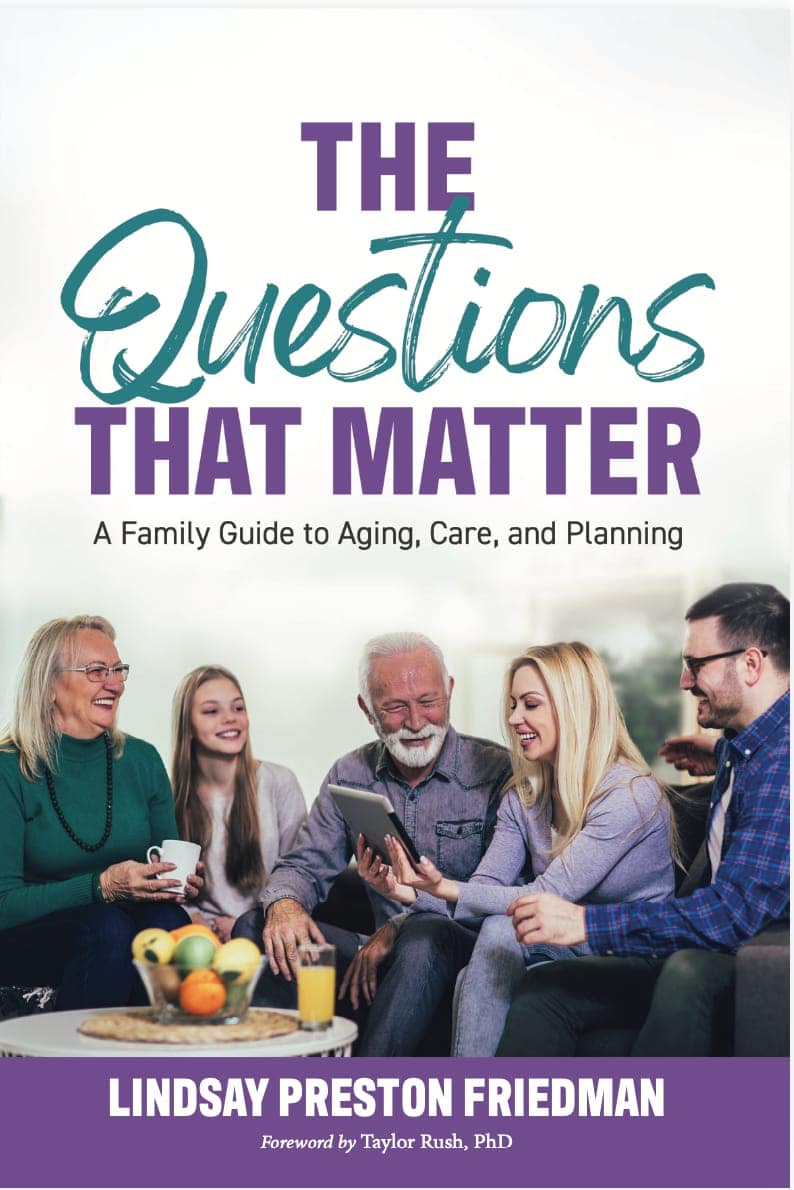
Every card is a doorway. The Questions That Matter: A Family Guide to Aging, Care, and Planning is the full guide behind the deck — the chapter, the context, and the next conversation for every prompt you've already started at the table.
Reading the answer is one thing — knowing what it means for your family is another. Get a free, personalized long-term care plan. No pressure, no flood of sales calls, just the next right step for where you are today.