This is one of the most emotionally complicated parts of the decision to move. Because for many people, letting go of the home is harder than the physical move itself.
The home is not just a building. It is memory. It is identity. It is the place where your life happened — where children grew up, where holidays were hosted, where a spouse may have died. The idea of selling it, of someone else living in it, of no longer being able to walk through rooms that hold decades of history, can feel unbearable.
**The honest questions to ask yourself.** If you needed to move for safety reasons, but you were not emotionally ready to sell, what would you want to happen? Some people keep the home for a period of time to give themselves psychological space to adjust. Others find that keeping it creates ongoing stress and expense without meaningful benefit.
Would keeping the home temporarily help you feel less like you were giving up everything at once? Or would it simply delay an inevitable grief — and an inevitable bill?
If you moved and kept the home, who would actually manage it? Who would handle maintenance, taxes, insurance, utilities, lawn care, snow removal, the broken water heater at 11 p.m. on a Sunday? Is that realistic — or is it adding burden to people already managing your transition?
**Three common middle paths.**
1. **The transition period.** Move into the new community, but keep the house empty for six to twelve months. Visit. Sort belongings slowly. Sell when you are ready, not when you are panicking. The cost is real (mortgage, taxes, utilities, insurance), but for many families it is the price of grief done well.
2. **Rent it out.** Generates income that can offset community costs and preserves the asset. But it turns the home into a small business — leases, repairs, tenants, taxes. Almost always, the labor falls on an adult child.
3. **Sell and move at the same time.** Hardest emotionally up front, simplest financially and logistically. Frees up equity to fund care and removes a recurring decision from the family's plate. Some families find that ripping the bandage off, with rituals around saying goodbye, is kinder than a slow drift.
**Financial and Medicaid considerations.** If long-term Medicaid is a possibility within five years, talk to an elder law attorney before selling, transferring, or gifting the house. The home is treated differently from other assets, but missteps — especially adding family members to the deed — can trigger penalty periods. There is no one-size-fits-all answer, and the rules vary by state.
The home is important. But it is not more important than your safety, your health, or your quality of life. And sometimes the kindest thing you can do for yourself is acknowledge that a place that once supported you beautifully no longer does, and that letting go — however painful — is an act of self-care rather than defeat.
**Raising it with your loved ones.** Name both truths at once. 'I know that if I ever had to move, letting go of this house would be one of the hardest things I've ever done. I need you to understand that. But I also need to be honest that my feelings about the house can't be the only thing driving the decision if staying here isn't safe.'
**Raising it as an adult child.** Validate the attachment first, then introduce the safety frame. 'I know how much this house means to you. I want to make sure that emotional attachment doesn't keep you somewhere that's no longer safe. Can we talk about what would help you feel okay about a move if it became necessary — keeping the house for a while, sorting things slowly, choosing what comes with you?'
What This Looks Like in Real Life
She agreed to move into assisted living after her second fall, but she could not bring herself to put the house on the market. Her children braced for a fight. Instead, her daughter said quietly, 'You don't have to sell yet. Let's just move you safely first, and we can keep the house for now.'
They kept it for nine months. Once a week, her daughter drove her over to sit on the back porch where she had read every summer for forty years. They sorted one box at a time — wedding china, her husband's tools, the children's elementary-school art. They had a small open house for neighbors to come say goodbye. By month seven, her mother said it first: 'I think it's time. The house has been very kind to me. But I live somewhere else now.'
The house sold in a week. The proceeds funded almost three years of her care. She kept a small framed photo of the back porch on her dresser at the community. She told her daughter, more than once, that being allowed to leave slowly was the only way she could leave at all.
What to Do Next
Separate two decisions: the move (driven by safety) and the sale (driven by readiness). Treat them as two questions, not one.
If you keep the home temporarily, write down who is responsible for what — bills, maintenance, lawn, emergencies — and how long the arrangement will last.
Plan a slow sort of belongings: room by room, box by box, with rituals (photos, stories, gifts to family) so the goodbye is not all at once.
Before selling, transferring, or adding family members to the deed, talk to an elder law attorney — especially if Medicaid may be needed within five years.
Get a current market value and a realistic carrying cost (mortgage, taxes, insurance, utilities, upkeep) so the family can compare 'keep' vs. 'sell' with real numbers.
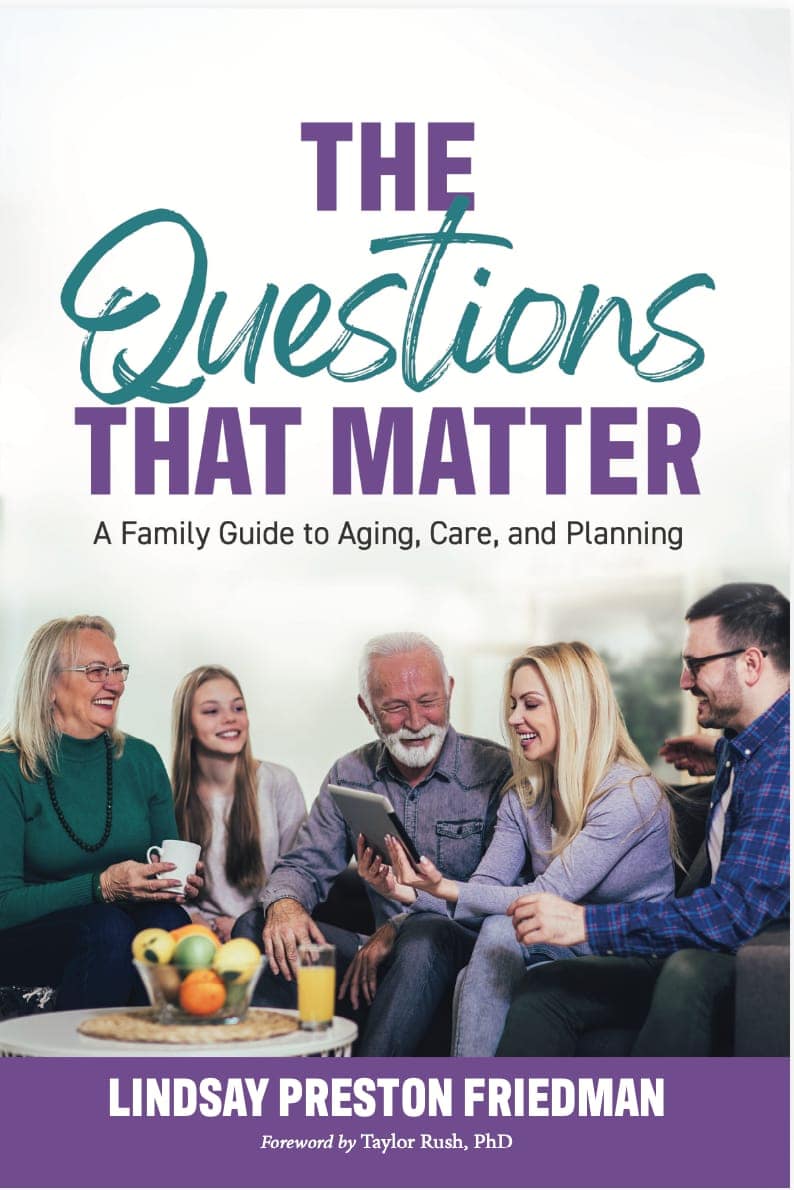
Every card is a doorway. The Questions That Matter: A Family Guide to Aging, Care, and Planning is the full guide behind the deck — the chapter, the context, and the next conversation for every prompt you've already started at the table.
Reading the answer is one thing — knowing what it means for your family is another. Get a free, personalized Care Plan in minutes. No pressure, no sales calls, just the next right step for where you are today.