Card #041 · The Question That Matters Card
    Question That Matters · #041

    Dad says he can absolutely still live alone. The evidence to the contrary includes  .

    The Real Question from the Book · When It's Time to Move — Housing, Safety & Letting Go

    Can I still live here safely, or am I just pretending I can?

    The Answer

    This is the question that sits at the heart of everything else. And it is the question most people avoid asking themselves honestly until something forces them to. The instinct is to say, 'Of course I can still live here. I've lived here for decades. I know this house better than anyone.' And that may be true. But the question is not whether you know the house. The question is whether the house still works for the body you have now. **The honest questions to ask yourself.** Walk through your home, not with the eyes of someone who has lived there forever, but with the eyes of someone assessing safety and sustainability. Are there stairs you must navigate daily to access a bedroom, bathroom, or laundry? Do you feel steady on those stairs, or do you grip the railing tightly every time? Have you had any close calls? Is your bathroom safe? Can you get in and out of the tub or shower without difficulty? Do you have grab bars, or do you hold onto towel bars or the edge of the sink — neither of which is designed to support your weight? Are there tasks you have quietly stopped doing because they felt risky? Changing lightbulbs. Cleaning gutters. Carrying laundry. Taking out the trash on icy mornings. These small abandonments add up. And what they add up to is a picture of a home that is becoming harder to manage. How often do you leave the house? Not for medical appointments, but for social connection, errands, activities you enjoy. If the answer is rarely or never, is that because you no longer want to, or because getting out has become difficult? If you live alone, how often do you go an entire day without speaking to another person? Isolation is a real and serious risk for older adults aging at home, and it accelerates cognitive and physical decline. Now ask the harder question. If your health declined even slightly in the next year, would your home still be safe? Or would it become a place where one mistake could lead to a catastrophic fall, a missed medication, or an emergency no one would know about for hours or days? **The most dangerous thing you can do is lie to yourself.** Admitting difficulty feels like failure. It feels like giving in to aging. It feels like the beginning of a loss of control you have been fighting against. Pretending does not protect you. It exposes you. Because if you are compensating, if you are holding onto walls, if you are avoiding tasks that feel risky, if you are isolating because getting out is too hard — you are not preserving independence. You are living in a state of precarious balance that will eventually fail. And when it fails, the decision about your housing will not be yours. It will be made in a hospital. By a discharge planner. You will have no time to research options, no ability to visit communities, no opportunity to choose a place that feels right. **Raising it with your loved ones.** 'I've been thinking honestly about the house, and I'm realizing that some things are getting harder. I don't know yet what that means — whether it's about making changes here or thinking about other options. But I wanted to tell you what I'm noticing, because I don't want to wait until there's a crisis to figure it out.' This opens the door to conversation without committing to a decision. **Raising it as an adult child.** Leading with concern directly will likely trigger defensiveness. Try instead: 'I've been thinking about the house and whether it still works well for you. Not because I think you should move, but because I want to understand how you're feeling about it. Are there things that have gotten harder?' If your parent deflects, gently persist: 'I'm asking because I care, and because I'd rather we talk about this while everything is calm than wait until something happens.' What not to say: 'You can't live here anymore.' Even if it is true, leading with that shuts the conversation down immediately.

    What This Looks Like in Real Life

    Her father insisted he was fine. He had lived in that two-story colonial for forty-one years. He knew every creak in every step. When his daughter visited for a long weekend, she did not argue with him. She just watched. She watched him take the stairs one at a time, both hands on the railing, pausing on the landing to catch his breath. She watched him hold the edge of the sink to swing his leg over the side of the tub. She noticed the unopened bag of birdseed by the back door — a chore he had loved for years and had clearly been avoiding. She noticed that in three days, the only person other than her he spoke to was the mail carrier. On Sunday night, instead of saying 'Dad, you can't live here,' she said, 'I noticed a few things this weekend, and I want to tell you what I noticed — not to push you anywhere, just to be honest with you.' She listed them, gently, one at a time. He was quiet for a long moment. Then he said, 'I know. I've been pretending it's fine because I didn't want it not to be fine.' That conversation did not end with a decision. But it started one — calmly, on his timeline, while he still had the ability to choose.

    What to Do Next

    1. Do an honest walkthrough: stairs, bathroom, kitchen, entryways. Note every place you grip, brace, or avoid.
    2. Schedule a free in-home safety assessment with an Occupational Therapist (often covered by Medicare with a doctor's referral) or your local Area Agency on Aging.
    3. Track social contact for one week: how many days you went without speaking to another person. Treat isolation as a safety issue, not a personality issue.
    4. List the tasks you have quietly stopped doing in the past year. Patterns matter more than any single item.
    5. If you find yourself compensating in three or more areas, start exploring options now — home modifications, in-home help, or community living — while the decision is still yours.
    Sources & references

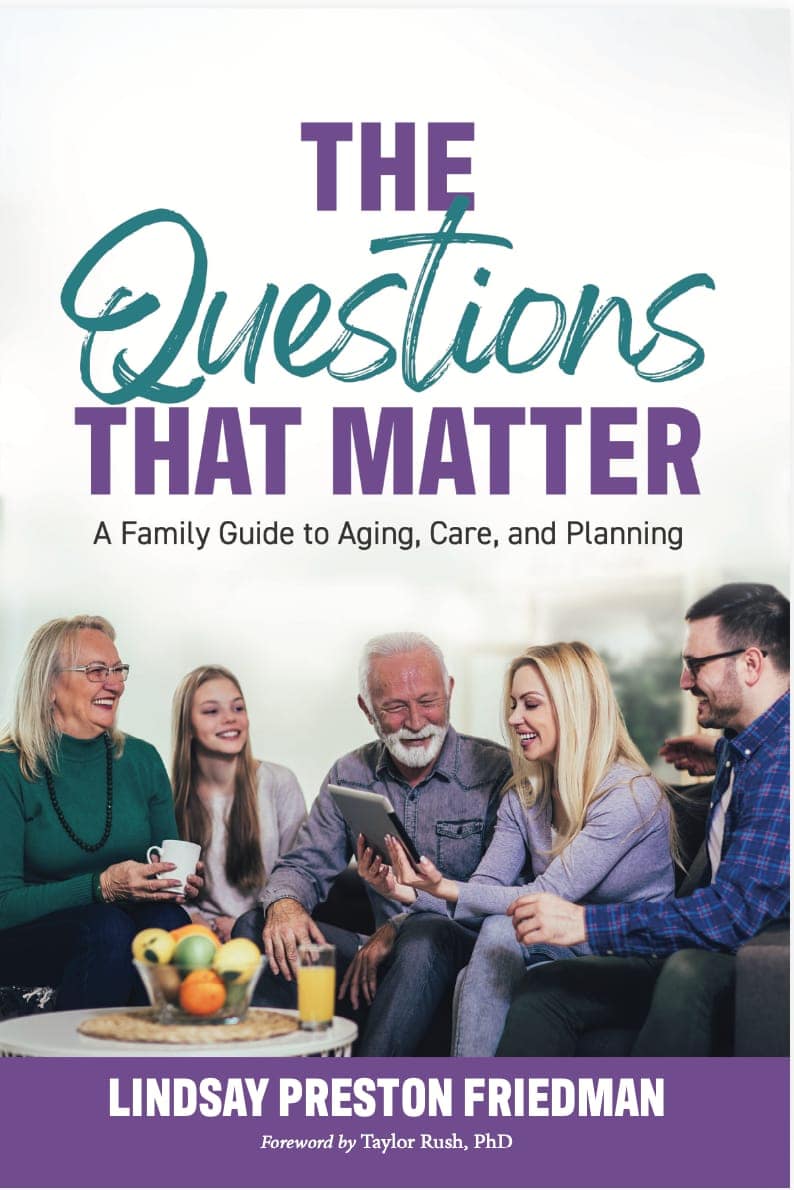
    The Questions That Matter — A Family Guide to Aging, Care, and Planning
    The Source of These Answers

    You've got the cards. The book goes deeper.

    Every card is a doorway. The Questions That Matter: A Family Guide to Aging, Care, and Planning is the full guide behind the deck — the chapter, the context, and the next conversation for every prompt you've already started at the table.

    Make It Personal

    Turn this question into your own plan.

    Reading the answer is one thing — knowing what it means for your family is another. Get a free, personalized Care Plan in minutes. No pressure, no sales calls, just the next right step for where you are today.

    Get Your Free Care Plan

    Free forever · No credit card · Founded by Lindsay Friedman