Card #023 · The Question That Matters Card
    Question That Matters · #023

    The person named as healthcare power of attorney has never been inside a hospital. Their plan is  .

    The Real Question from the Book · The Documents That Speak for You

    How do I choose who gets healthcare power of attorney?

    The Answer

    Healthcare power of attorney is a different animal entirely. Where financial POA requires organizational skill, healthcare POA requires emotional steadiness, the ability to process medical information quickly, and the strength to make decisions that may be heartbreaking. The qualities that make someone excellent with finances do not automatically make them excellent in a hospital room. I have seen this play out in painful ways. A parent names their most responsible child as both financial and healthcare agent because that child 'handles everything.' But when a medical crisis arrives, that same child falls apart. The emotional weight is too much. This is not the child's fault. It is a mismatch between role and capability. **The honest questions to ask yourself.** Think about the people in your life, and think specifically about how they respond to medical settings and emotional stress. Who stays calm in hospitals? Who can have hard conversations with doctors without becoming overwhelmed? Who processes information clearly even when emotions are running high? Who would actually advocate for you — even if it meant pushing back against medical recommendations? Who understands your values well enough to make decisions that align with what you would want, not what they would want for themselves? The child you are closest to may be the one who becomes too emotional in crisis. The spouse you have been married to for fifty years may fall apart at the thought of making end-of-life decisions. If that is true, choosing them anyway does not honor the relationship. It burdens it. **Splitting the roles.** The skills required for financial and healthcare POA are distinct. There is no rule that says the same person must handle both. In fact, splitting the roles can be strategic. It allows you to match people to what they do best and often prevents resentment among siblings. If you name different people for different roles, say so explicitly: 'I'm naming you for healthcare decisions because I trust your judgment in hospitals and I know you can stay calm. I'm naming your sister for financial decisions because she's better with paperwork. Both roles matter equally.' **Naming is only half the work.** Choosing a healthcare agent is only part of the equation. The other part is making sure that person knows what you actually want. Have you told them whether you would want aggressive intervention if your quality of life was permanently compromised? Have you talked about what 'quality of life' means to you specifically? These conversations are uncomfortable. They require imagining scenarios most of us would rather not think about. But without them, your healthcare agent is guessing. And the people who love you should not have to guess.

    What This Looks Like in Real Life

    She names her oldest daughter for everything. The daughter is the responsible one, the one who has always handled the hard things, the one her mother trusts most. On paper, it is the obvious choice. Three years later, her mother is in the ICU after a massive stroke. The neurologist explains, gently, that even with maximum intervention the recovery would be limited and the suffering would be significant. He asks the daughter what her mother would want. The daughter cannot answer. They never talked about it. And the daughter — who has always been the strong one — is sobbing in a hallway, unable to make a decision, asking the chaplain what she should do. Her younger brother, who lives across the country, arrives the next day. He is quieter, less polished, the one nobody would have picked as 'the responsible one.' But he sits down with the medical team, asks calm and specific questions, remembers a long conversation he had with his mother on a porch in 2019 about exactly this scenario, and gently helps the family honor what she had said. He should have been the healthcare agent all along. Nobody knew, because nobody had asked the right question.

    What to Do Next

    1. List candidates and rank them on three traits: stays calm in hospitals, can push back on doctors when needed, and would honor your values over their own preferences.
    2. Separate financial POA from healthcare POA. Match each role to the person who is actually best at that specific job.
    3. Once you choose, tell them — and tell the people you did not choose — why. 'You are my healthcare agent because you stay calm under pressure' prevents the silent hurt that breeds family conflict.
    4. Have at least one real conversation with your healthcare agent about what 'quality of life' means to you, what kinds of intervention you would or would not want, and what you would want at end of life. Write it down.
    5. Pair the healthcare POA with an Advance Directive or Living Will, and consider a POLST/MOLST form if you have a serious illness. Make sure your agent has copies and your doctor has it on file.
    Sources & references

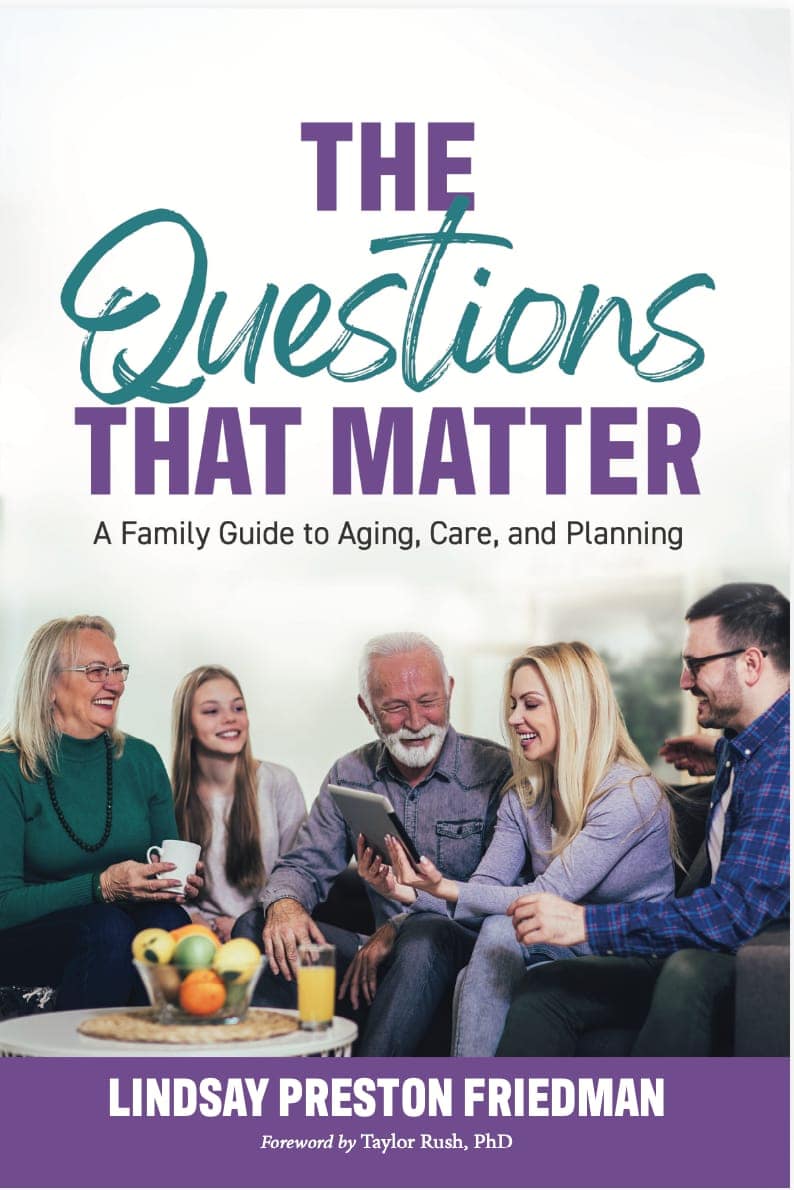
    The Questions That Matter — A Family Guide to Aging, Care, and Planning
    The Source of These Answers

    You've got the cards. The book goes deeper.

    Every card is a doorway. The Questions That Matter: A Family Guide to Aging, Care, and Planning is the full guide behind the deck — the chapter, the context, and the next conversation for every prompt you've already started at the table.

    Make It Personal

    Turn this question into your own plan.

    Reading the answer is one thing — knowing what it means for your family is another. Get a free, personalized Care Plan in minutes. No pressure, no sales calls, just the next right step for where you are today.

    Get Your Free Care Plan

    Free forever · No credit card · Founded by Lindsay Friedman