Card #011 · The Question That Matters Card
    Question That Matters · #011

    Dad's bedroom is upstairs, laundry is in the basement, and his plan if stairs become impossible is  .

    The Real Question from the Book · Staying Steady — Mobility, Falls & Physical Safety

    If stairs became difficult, what would that mean for daily life?

    The Answer

    Stairs are often the silent dividing line between independence and relocation. Bedrooms upstairs, laundry in the basement — these features are not incidental but central to how a home functions, and they can quickly become dangerous and limiting. For many households, the risk is not obvious until something happens: a fall that makes it urgent, a surgery that makes climbing impossible for weeks, or a gradual decline that turns every step into a calculation. The families who navigate this best are the ones who have already thought through these scenarios before any of those moments arrive. **The honest questions to ask yourself.** Think through your home honestly. If climbing stairs became painful or unsafe, how would your daily life need to change? Is there a bedroom or full bathroom on the main floor, or could one be created? What about laundry, and the entrance to the home? Now the harder version: if stairs became completely inaccessible tomorrow, would you still be able to live in your home safely? If the answer is no — or even "maybe not" — that is worth sitting with. Not to create panic, but to create a plan. **Options worth knowing about.** For many homes, solutions exist well short of moving. A bedroom can be relocated to the main floor. A half-bath can be converted to a full bath. A stair lift, which is far more affordable than many people assume, can restore access to an entire floor. For others, the honest answer is that the home is not modifiable enough to support aging safely, and a planned move made on one's own terms is far preferable to a crisis-driven one. That conversation is easier to have at sixty-eight than at eighty-two, and easier to have before a fall than after one.

    What This Looks Like in Real Life

    Your dad's bedroom is upstairs. Laundry is in the basement. The only full bathroom is on the second floor. He has lived in this house for forty-one years and the layout has never been a problem — until the knee surgery he is now facing in six weeks. Suddenly the stairs are not a feature; they are the question. The instinct is to wait and see how recovery goes. The better move is to map the contingency now, while it is still hypothetical and the decisions are calm. Could the den become a temporary main-floor bedroom? Is there room for a commode and a sponge-bath setup until he can get upstairs? What does a stair lift cost, and how fast can one be installed? Most families are surprised — they are usually a fraction of what people assume, and many companies install in under a week. Frame it as planning, not prediction. "I'd rather have the options on the table now than be scrambling the day you come home from the hospital." That is a very different conversation than the one that happens at 9 p.m. on discharge day in a hospital parking lot.

    What to Do Next

    1. Walk through the home and answer the practical questions: where would the bed go if upstairs became off-limits? Where would laundry, the bathroom, and meals happen?
    2. Get a real quote on a stair lift before assuming it is out of reach. Many straight-rail lifts are far cheaper than people expect and can be installed in days, not weeks.
    3. Identify whether a main-floor full bath can be created — even a converted half-bath with a curbless shower changes the long-term picture for the entire home.
    4. Request an occupational therapist home assessment through the primary care doctor. Medicare Part B covers OT evaluations with a referral, and a clinician can spot modifications worth doing now.
    5. Open the conversation as contingency planning, not prediction of decline: "I'd rather think through the options now than figure it out in a rush." If the answer is "I'm not at that point," agree — and use that exact moment as the reason to plan.

    Sources & references

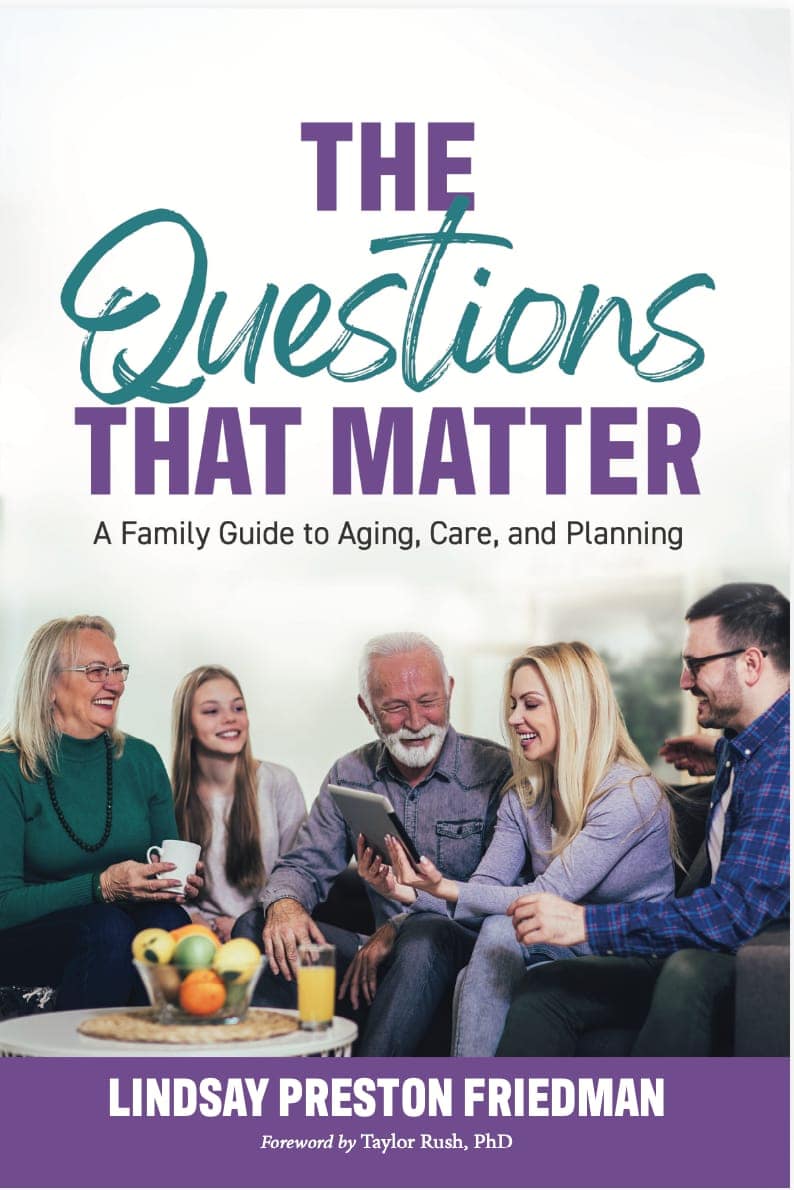
    The Questions That Matter — A Family Guide to Aging, Care, and Planning
    The Source of These Answers

    You've got the cards. The book goes deeper.

    Every card is a doorway. The Questions That Matter: A Family Guide to Aging, Care, and Planning is the full guide behind the deck — the chapter, the context, and the next conversation for every prompt you've already started at the table.

    Make It Personal

    Turn this question into your own plan.

    Reading the answer is one thing — knowing what it means for your family is another. Get a free, personalized Care Plan in minutes. No pressure, no sales calls, just the next right step for where you are today.

    Get Your Free Care Plan

    Free forever · No credit card · Founded by Lindsay Friedman