Card #040 · The Question That Matters Card
    Question That Matters · #040

    Mom refuses to tell anyone how much money she has because  .

    The Real Question from the Book · Family Money Conversations — Fairness, Contributions & Hard Truths

    Should I tell my children how much money I have?

    The Answer

    This may be the most avoided question in the entire chapter. For many parents, financial information feels deeply private. Sharing it can feel like giving up control, inviting judgment, or creating expectations they do not want to manage. However, there is a cost to secrecy. When adult children do not know their parents' financial reality, they cannot plan effectively. They make assumptions — often incorrect ones — about what resources exist and what role they may need to play. **The honest questions to ask yourself.** Do your children know, even generally, what financial resources you have? Do they know whether you could afford extended care, or whether you would run out of money quickly? Do they know whether there will be an inheritance, or whether care costs are likely to consume most or all of your assets? If they do not know, why not? Is it truly about privacy, or is it about control? Is it about protecting them from worry, or about protecting yourself from their reaction? These are hard questions. But they are worth asking. **The middle path: share the picture, not the spreadsheet.** You do not have to share exact account balances to provide useful information. The most useful frame is runway — how long your resources could sustain different levels of care. 'I could afford care for about two years before things would get tight' tells your children almost everything they need to know to plan well, without surrendering a single account number. **Where the documents live matters as much as the numbers.** Even parents who want to keep numbers private can dramatically reduce the burden on their children by writing down where everything is — accounts, advisors, attorneys, insurance policies, deeds, passwords, the safe deposit box. A simple one-page document, kept somewhere known, often does more good than full financial disclosure ever would. **Raising it with your loved ones.** 'I want you to know, generally, where things stand financially. I'm not going to give you every detail, but I want you to understand that if I needed care, I could afford it for [a while / several years / indefinitely / not very long]. I'm telling you this so you can plan your own life accordingly, and so we're not all guessing when the time comes.' That level of transparency, even without specifics, allows families to make better decisions. **Raising it as an adult child.** 'I don't need to know exact numbers, and I'm not asking about inheritance. But I do need to understand, generally, whether you're financially secure or whether there are things we should be planning for. Can we talk about that?' Lead with what you are not asking for. It is almost always more important than what you are. **When a third party helps.** Some families find it easier to have this conversation with a financial planner or elder law attorney in the room. The professional becomes the receiver of the detail, while the children get the framework they need without the parent feeling stripped of privacy.

    What This Looks Like in Real Life

    She had been a private person all her life, and she did not see any reason to change that at seventy-six. When her daughter gently asked, after a scary hospital stay, whether they could talk about her finances, her mother's answer was immediate: 'That is not your business until I am gone.' For six months, nothing changed. Then her mother had a small stroke. Suddenly her daughter was sitting with bills, prescriptions, an insurance card, and absolutely no idea whether her mother could afford the rehab facility the hospital was recommending — or whether they needed to be looking at Medicaid, or moving her in, or making any number of decisions that depended entirely on numbers her daughter did not have. Weeks later, after her mother had recovered enough to talk, they sat down again. This time her mother said something different. 'I'm not going to show you my accounts. But I will tell you this: I have enough to cover good care for about three years. After that, we'd need to think about Medicaid. Everything important is in the brown folder in the bottom drawer of my desk. My attorney's name is on the inside cover.' Her daughter said it was the single most useful conversation they had ever had. Her mother kept her privacy. Her daughter got her runway. Both of them slept better that night.

    What to Do Next

    1. Decide what level of disclosure you are actually comfortable with: full numbers, runway only, or 'where the documents live' only.
    2. Write a one-page financial summary — accounts (institutions only, not balances), insurance, attorney, advisor, deeds, safe deposit box, key passwords. Tell at least one trusted person where it is kept.
    3. Tell your children the runway: roughly how long your resources could sustain care if you ever needed it.
    4. If a full conversation feels too exposing, schedule it with your financial planner or elder law attorney in the room as a neutral third party.
    5. Update the summary annually, or after any major financial change. Outdated information can be worse than no information.
    Sources & references

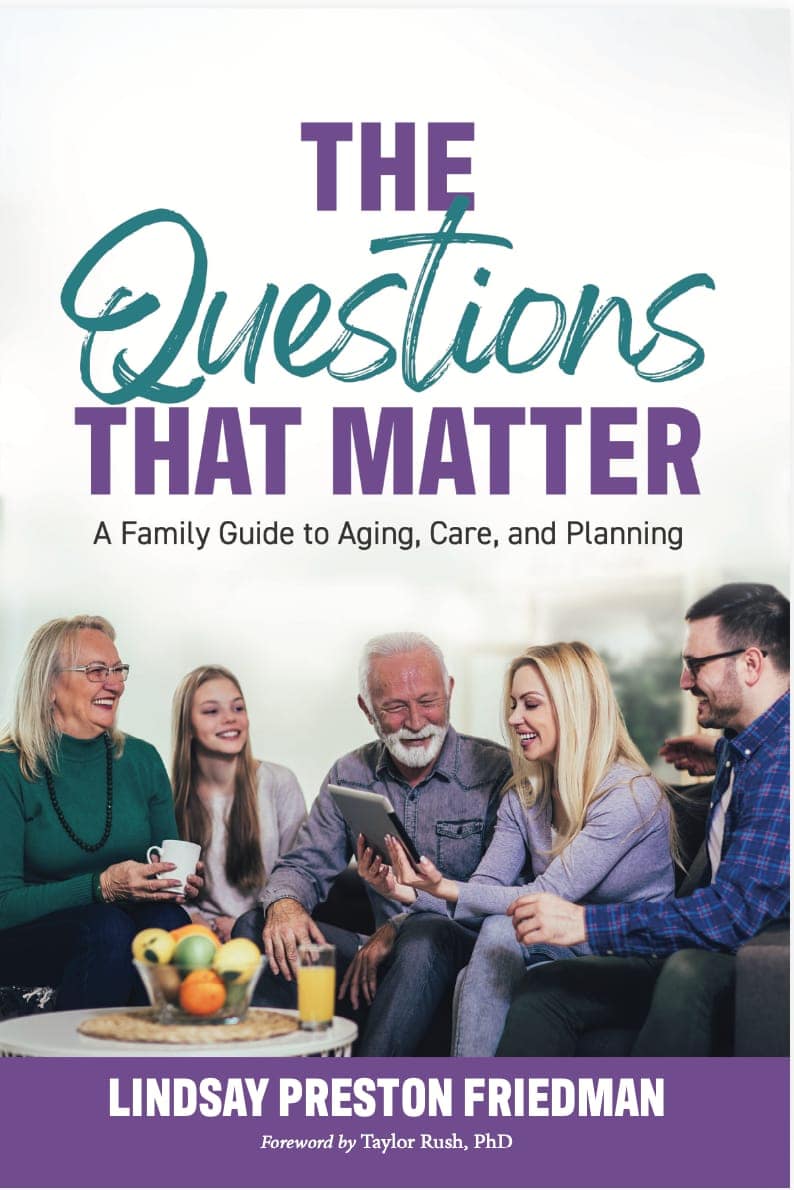
    The Questions That Matter — A Family Guide to Aging, Care, and Planning
    The Source of These Answers

    You've got the cards. The book goes deeper.

    Every card is a doorway. The Questions That Matter: A Family Guide to Aging, Care, and Planning is the full guide behind the deck — the chapter, the context, and the next conversation for every prompt you've already started at the table.

    Make It Personal

    Turn this question into your own plan.

    Reading the answer is one thing — knowing what it means for your family is another. Get a free, personalized Care Plan in minutes. No pressure, no sales calls, just the next right step for where you are today.

    Get Your Free Care Plan

    Free forever · No credit card · Founded by Lindsay Friedman