Nobody in your family has had this conversation, and you are not alone. National surveys consistently find that more than 90% of older adults say they want to talk about their end-of-life wishes — and fewer than 30% have actually done it with their family. The gap between what people want and what people do here is enormous, and the cost of that gap is paid by everyone, especially in the worst moments.
**Why the conversation keeps getting delayed.** It is almost always one of three reasons, and naming the right one makes it easier to move past:
1. *Magical thinking.* The unspoken belief that talking about death will somehow bring it closer. It will not. Death is the one event whose timing is not influenced by whether you have talked about it. The only thing the conversation changes is whether the people you love know what you want when the moment arrives.
2. *Protective avoidance.* Adult children do not want to upset their parents. Aging parents do not want to burden their children. Spouses do not want to make each other cry. Everyone is being kind, and the kindness is killing the conversation. The truth is that most aging adults are *relieved* when an adult child raises the topic — they have been thinking about it for years, and finally someone is willing to talk about it with them.
3. *Not knowing where to start.* It feels enormous. It feels like it requires the right setting, the right mood, the right script. It does not. It requires one specific opening question and a willingness to listen.
**The five things to write down.**
1. *Healthcare proxy / durable power of attorney for healthcare.* The single most important document. It names the person legally authorized to make medical decisions if you cannot. Without it, hospitals default to next-of-kin in a state-defined order, which sometimes excludes the person you would have chosen.
2. *Advance directive (living will).* Specifies what kinds of treatment you want or do not want — CPR, mechanical ventilation, feeding tubes, dialysis, hospitalization in late-stage illness. Most states have a free standard form available through the state attorney general or department of health.
3. *POLST / MOLST (where state-applicable).* Physician Orders for Life-Sustaining Treatment. Unlike an advance directive, this is a medical order signed by both the patient and the physician. It travels with the patient — emergency responders are required to follow it. Best for those with serious illness or advanced age. Find your state's version at polst.org.
4. *HIPAA release.* Authorizes specific people to receive medical information from your providers. Without it, doctors cannot legally tell your family what is happening.
5. *Letter of values.* Not a legal document, but often the most useful. A one- or two-page letter, in the person's own words, that says what matters to them. Where they want to die if there is a choice. What they would consider a quality of life worth preserving — and what they would not. What they would refuse. What brings them joy. Who they want in the room. This document does what no checkbox can: it tells the family how to interpret the gray areas the legal documents cannot anticipate.
**How to start the conversation.**
- *Pick the moment.* Not a holiday dinner. Not a hospital bed. A calm Saturday morning. A drive in the car (no eye contact often makes it easier). After watching a movie or reading an article that touched on death naturally.
- *Use a doorway question.* 'I read something the other day that made me think about this — if you got really sick and couldn't speak for yourself, what would you want me to know?' Or: 'I want to make sure that if anything ever happens, I know what you would want — not what I think you would want. Can we talk about that sometime?' Or: 'I just did mine. It made me realize we should probably do yours too.'
- *Listen more than you talk.* The first time, your job is not to convince anyone of anything. Your job is to hear. Take notes. Ask 'what else?' three more times than feels natural.
- *Make it iterative, not a one-time event.* The first conversation is the hardest. The second is easier. The third feels normal. Wishes change over time, and revisiting is a feature, not a failure.
**If you are the one navigating this alone — without family, without siblings, without partners.** Some people face this without anyone. Only children. Estranged families. Widows and widowers without children. Asking for help is not weakness; it is wisdom. Reach out to:
- *A hospital social worker or palliative care team.* They do this work every day and can walk you through your options.
- *A hospital chaplain.* Available in nearly every hospital, regardless of your religion. Trained specifically in end-of-life conversations.
- *Hospice and palliative care organizations* even before you need them. Many offer free consultations and advance care planning support.
- *An Aging Life Care Manager.* A paid professional who can be the person at the table when no family is available.
- *A faith community, a longtime friend, a neighbor.* You do not need a blood relative to be loved through this. You need someone who will pick up the phone and sit with you.
**The cost of avoiding the conversation.** When crisis arrives and no one knows what the person would have wanted, decisions get made under pressure that often do not align with the person's values. Aggressive treatment is the medical default — it is what happens when no one has said otherwise. People die in ICUs they would not have chosen, on machines they would have refused, surrounded by exhausted family members who will spend years wondering whether they did the right thing.
The regret that follows that kind of moment is heavy, and it lasts. None of it is inevitable. Crisis will come. But chaos — the chaos of guessing — does not have to.
**Raising it as the aging adult.** If you have been waiting for your children to bring it up, stop waiting. Bring it up yourself. 'I know we don't talk about this. But I need to. I want to make sure you know what I want before something happens, not after. Can we sit down on Sunday and go through it?' Naming it as a gift to them — not a burden — almost always reframes the conversation.
**Raising it as the family member.** Lead with curiosity and love, not logistics. 'I'm not trying to plan anything dark. I just realized I don't actually know what you would want, and I want to. Can we talk about it sometime soon, while it's a calm conversation and not a hospital one?'
What This Looks Like in Real Life
Her mother was seventy-four, healthy, sharp, and entirely unwilling to talk about death. Every time the daughter brought it up, her mother waved her hand and said, 'Plenty of time for that later.' The daughter let it drop. For years.
Then her mother's best friend died — a sudden stroke, no advance directive, two weeks in an ICU on machines while her adult children fought over what she would have wanted. Her mother went to the funeral and came home quiet. That night she called the daughter and said, 'I think we need to do that thing you keep asking about. I don't want to do that to you.'
They spent a Saturday morning at the kitchen table with two cups of coffee and the state's free advance directive form. The daughter asked one question at a time and wrote down the answers. They talked for three hours. Her mother told her things the daughter had never heard — what her mother had thought watching her own father die thirty years before, what she would and would not want, where she wanted to be when it happened, who she wanted in the room. They filled out the advance directive. They signed a healthcare proxy naming the daughter. They did the POLST a year later when her mother started chemotherapy. They updated the letter of values twice.
Her mother died at home four years later, in hospice, on a Tuesday afternoon. The daughter sat with her, holding her hand, and at no point during the last six weeks did she have to guess what her mother would have wanted. Every decision was already made. The Saturday morning at the kitchen table — three hours, two cups of coffee — turned out to be one of the most important conversations of her mother's life. And her own.
What to Do Next
Pick a calm moment in the next two weeks and use a doorway question: 'If you got really sick and couldn't speak for yourself, what would you want me to know?'
Download your state's advance directive (living will) form — usually free through the state attorney general or department of health.
Sign a healthcare proxy / durable power of attorney for healthcare naming the person you trust to make medical decisions if you cannot.
Sign a HIPAA release naming everyone who should be allowed to receive medical information from your providers.
If you or your loved one has serious illness or advanced age, complete a POLST/MOLST with your physician (find your state's form at polst.org).
Write a one- or two-page letter of values in your own words — where you want to die, what quality of life you would want preserved, what you would refuse, who you want in the room.
Make sure every family member knows where the documents are stored. Send a digital copy to your healthcare proxy. Give a copy to your primary care doctor.
If you are navigating this alone, call a hospital social worker, hospital chaplain, or hospice/palliative care organization. Many offer free advance care planning support.
Plan to revisit the conversation every few years, after any major health change, and after any major life event. Wishes evolve.
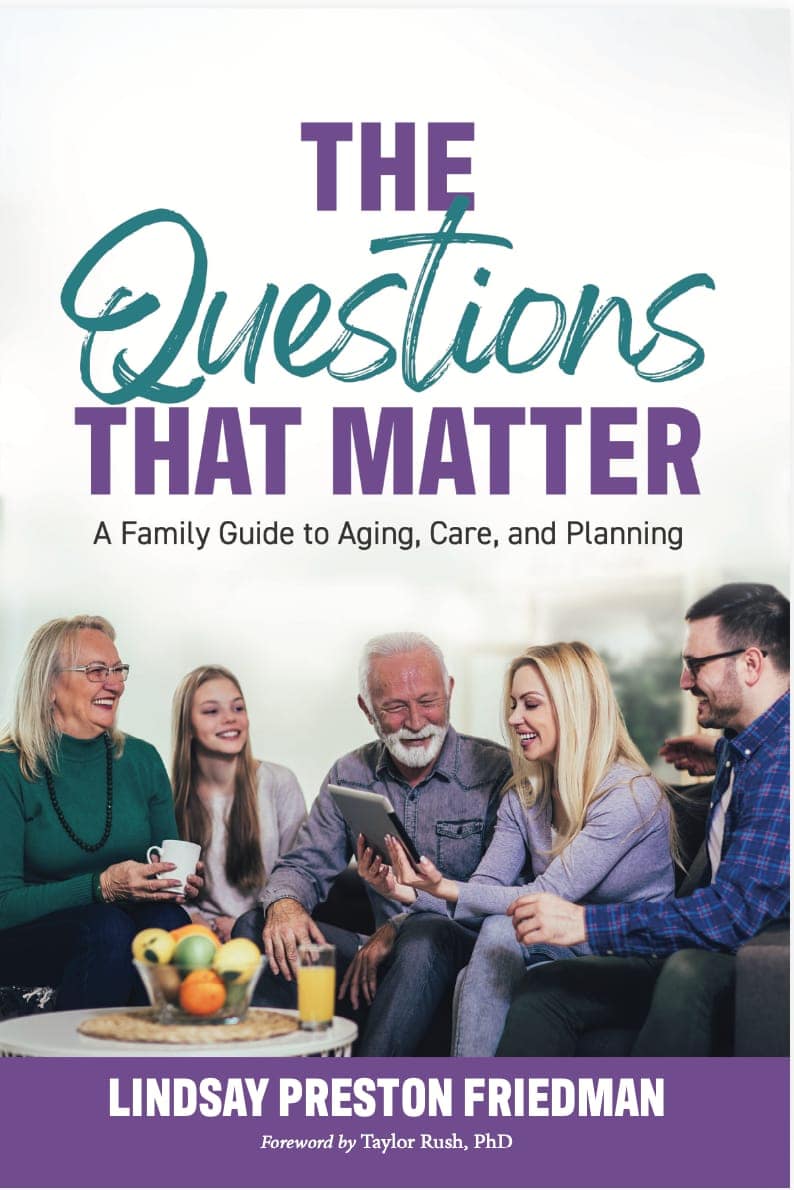
Every card is a doorway. The Questions That Matter: A Family Guide to Aging, Care, and Planning is the full guide behind the deck — the chapter, the context, and the next conversation for every prompt you've already started at the table.
Reading the answer is one thing — knowing what it means for your family is another. Get a free, personalized Care Plan in minutes. No pressure, no sales calls, just the next right step for where you are today.